There are so many ways to dye fabric and yarn these days, that it can be overwhelming in picking any one method. My preference is to handle as few noxious agents as possible. And sometimes that is close to impossible or improbable, even when studying methods from the old days of yore, since where there is dye, there must be an agent to make that dye stick. When the opportunity popped up to take a natural dye class with Ric Rao of Las Cruces, New Mexico, I jumped on the chance and was absolutely enthralled with the process as well as the results.


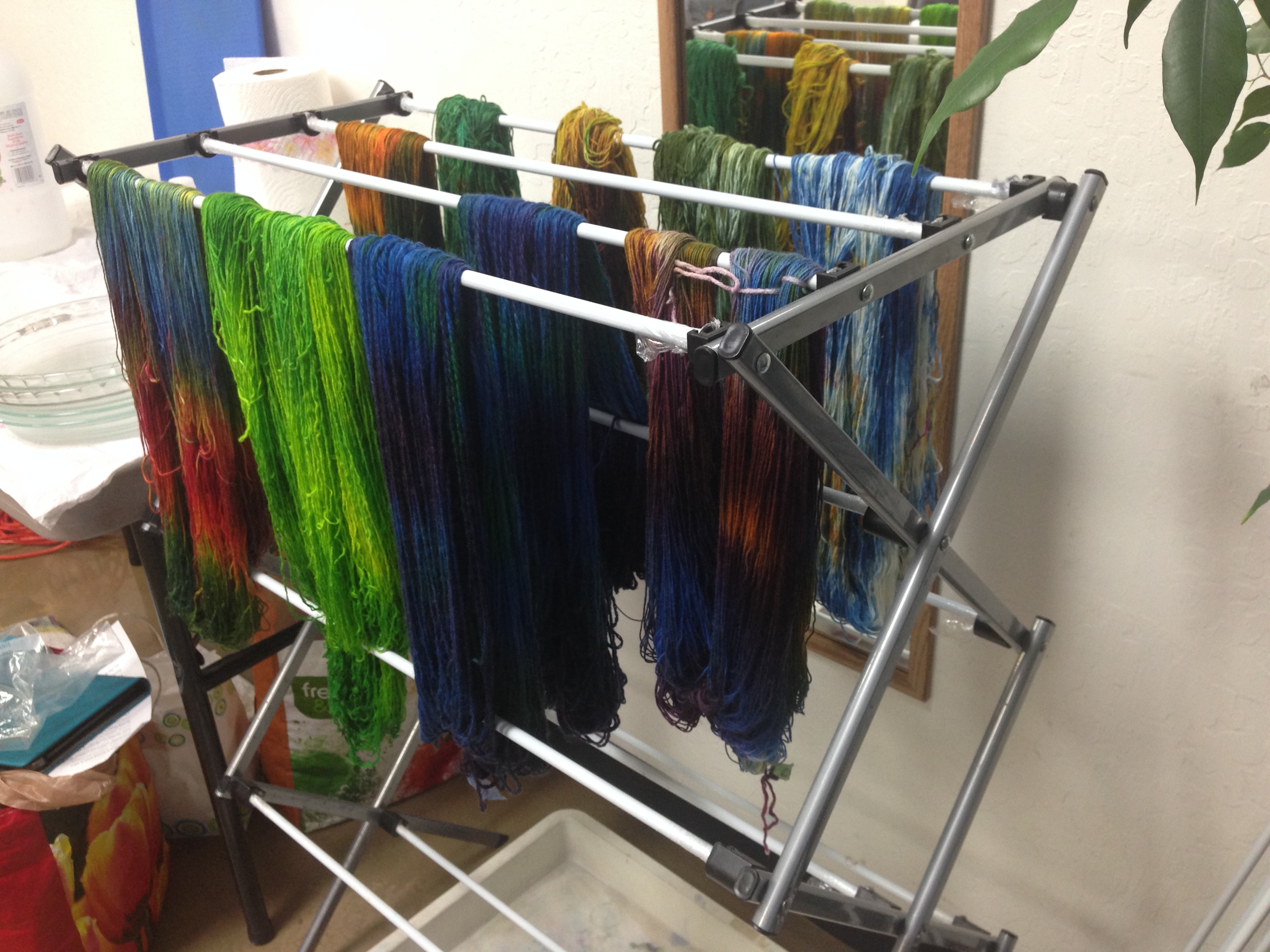
Ric is always searching out natural dye sources, and also has an extensive dye garden in Las Cruces. The first day of class we used Black Walnuts, Brazilwood, Chamisa (Rabbitbrush), Cochineal, Cota (Navajo Tea), Logwood, Osage Orange, and Snakeweed (with and without Iron). On the second day we used plants exclusively from Ric’s garden – Cosmos (Yellow and Orange), Hibiscus flowers, Hollyhocks, Madder, Indigo, Marigolds, Pecan and Goldenrod.
It was hot work, but very rewarding. Checking on the boiling pots, checking the process, straining the “brew” and adding the fiber to the pot – lots of heat! I usually do pretty well when I am dying “under supervision”. On my own I tend to overthink the process and get into all sorts of problems. But at this point the lightbulb has illuminated – I have a focus on the type of fiber that I am going to be experimenting on in my weaving. Also, I really want to focus on the desert palate because it is so amazingly versatile with so many options.
Another intriguing aspect of the day was observing the differences in how the dye took to the sample cards that Ric created for us from each pot compared to the variety of yarns each one of us added to the same pot. Since I knew that I had used different tannins for the cellulose-based fibers, I could see the impact of modifying that step of the process. This can be a never-ending science project! I can really appreciate the effort it takes for people who need to replicate colors consistently. Now I am convinced that it is a black art – even something as unassuming as the type of water or humidity level can change the outcome.
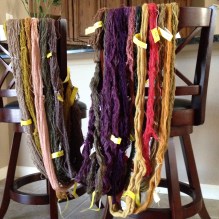
My Desert Palate
So now I have an amazing desert palate, documented in my notebook for reference when preparing future dye sessions. I hope to be able to resurrect my favorite outcomes – the Black Walnut, Pecan and Snakeweed with Iron – so I can work those colors into a cool weaving project!

My Dye Notebook










Woodpeckers Don’t Get Concussions
Sometimes small truths put life in perspective and help us get through the day. For Leo Kottke, who played a smoking concert at the Musical Instrument Museum (MIM) in Phoenix last night, the title remark was his concert opening.
Leo Kottke has been at the fringe of my musical attention for many years, but I never had an obvious and realistic opportunity to see him play in person. Let’s face it – going to a concert these days is an assault on the senses. It seems most venues continually find ways to amplify music to the point of hearing oblivion, with lights and flashes to amplify the pain to the infinite level. I don’t appreciate walking out of a concert not being able to hear for three days afterwards. That said, thank god for performers like Leo Kottke, and venues like the MIM, to bring music back to the level where it can be experienced and appreciated in full resonance, enhancing your mind instead of crushing it in your body.
There is something magical in finding a lone musician on stage, instruments at the ready, plying the craft and producing a personal experience. Back in the day, in Jersey (New Jersey), my high school friends and I would find ways to get tickets to performers at the Capital Theater in Passaic, NJ. It was a triple X theater by day, so you can imagine parental reaction to that factoid. It was there that we saw Melanie, Jackson Brown, New Orleans, Elvis Costello, among others. But it was in that creaky, stale-smelling old theater that I learned the appreciation of listening to musicians tell and sing their stories, with music being the main attraction, in what could idealogically be described as an elegant and intimate space.
I am sure that there are other modern venues like the MIM throughout the country. My hats off to them, because it’s that experience that will keep real music alive, at least in my life.
And thank you, Leo Kottke, for helping to keep these venues viable. Enjoyed the performance. And that “song from the 60’s” you hadn’t played in a while but played last night – it was my favorite of the evening. To quote a former boss of mine, if the past memory is bad, go back and change the memory to the present.
Life is good.
Share this: