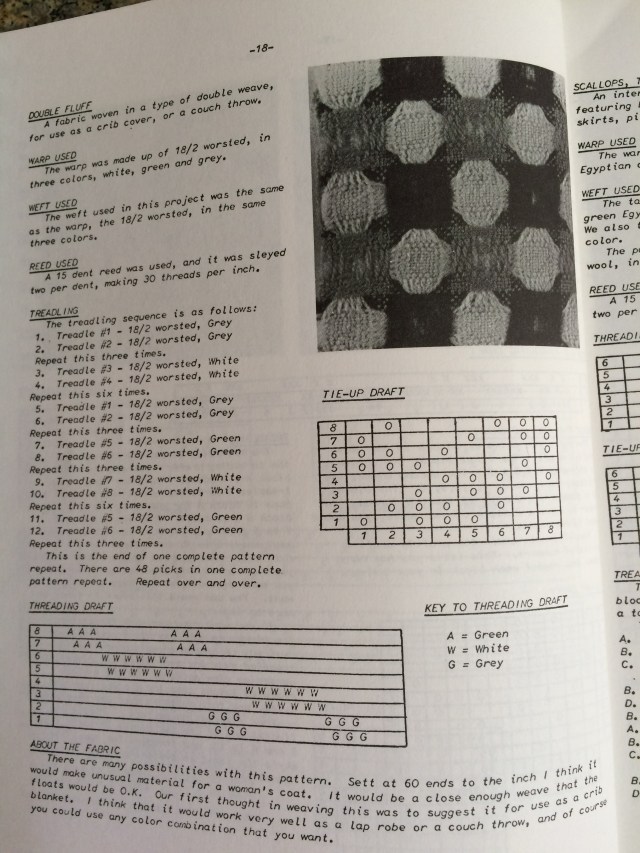
This all started with the scarf that Katniss wears in the second movie of The Hunger Games series, Catching Fire. She is hunting in District Twelve, her home district. It’s a really cool design. But the pixel level was not good enough for me to really analyze the pattern, especially since the scarf was all scrunched. Everything old is new again definitely applies to weaving. Patterns pop up in weaving circles like they are the latest new candy, and lo and behold you find something similar that has been published more than fifty years ago. For me, it’s the use of different fibers that makes for fun in the chase, even on the most simple patterns. Hmmm….. But with good friends on the look-out, observation, and patience brought a lot of patterns to my attention, and I started to learn about a new structure (new to me, at least), called deflected doubleweave, also known as integrated cell, and in the case of the pattern I am using for this project, Double Fluff (from Russell Groff, 200 Patterns for Multiple Harness Looms, Robin and Russ Handweavers, 1979). Thank you, to whomever in the Catching Fire production staff that chose that particular scarf for Katniss to wear!
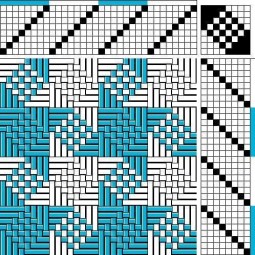
Mary Atwater Briggs has the earliest version that I happened to accidentally stumble upon without realizing what I was looking at (1957). Handwoven has a felted version that has been passed around a lot (January/February 2009, by Barbara Herbster). Weaving Today published a free How to Weave a Scarf e-book with a Felted Lace pattern by Madelyn van der Hoogt (on page 13). Alas, the Catching Fire scarf is definitely not felted. And it’s not really an open windowpane effect. I did try the tie-up and came out with mixed results:
Onward, indeed.
Kudos to my weaving friend Laura who found the real deal. It is called the “Double Fluff”, by Russell Groff, from 200 Patterns for Multiple Harness Looms, Robin and Russ Handweavers, 1979.
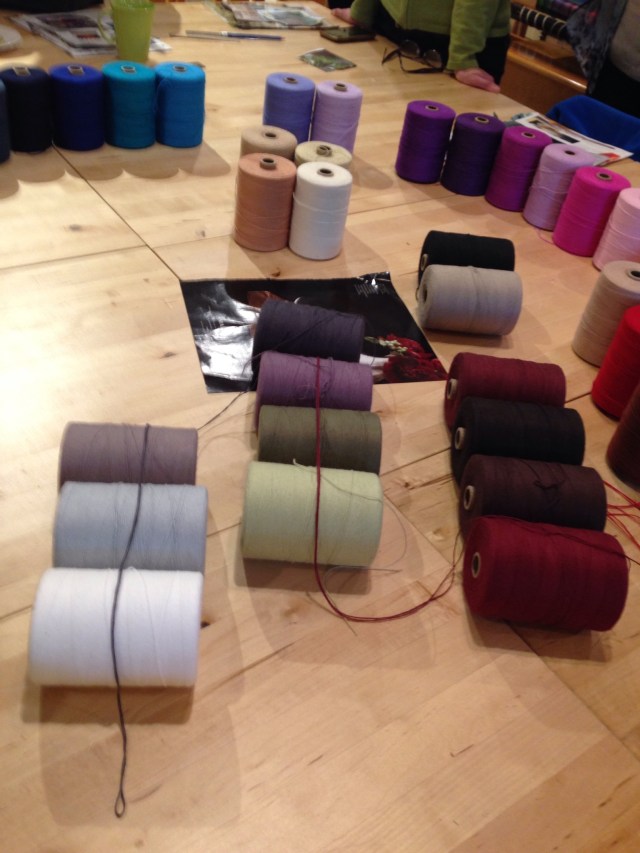
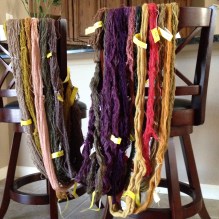
There was also the question of which threads I would use, and quite frankly I had been hoping to be able to use the yarn I dyed at my Rick Rao class back in February. After all, I had handspun silk in there as well as linen, cotton, linen boucle, merino wool and even embroidery thread. It would be a perfect showcase for all the colors that had grown together in Rick’s garden in New Mexico.
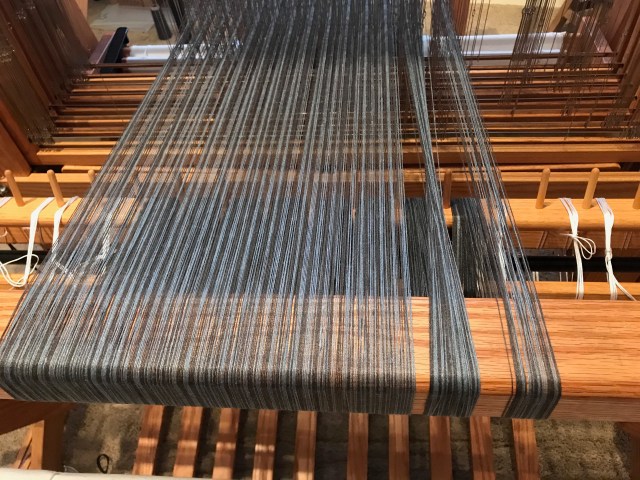
I quickly loaded it into my iWeave app to check the draft. Measured the warp, sectionally, and then loaded it onto the beam. My gut told me that I would be better off using my 8 dent reed than the 10 dent I had used in all my calculations. I just didn’t want to overtax the yarn through a narrower reed. After spreading the warp, I threw two plain weave picks and sewed a hemstitch, then threw four more plain weave picks. Out of curiosity I left a one (1) inch dent, then started the pattern.
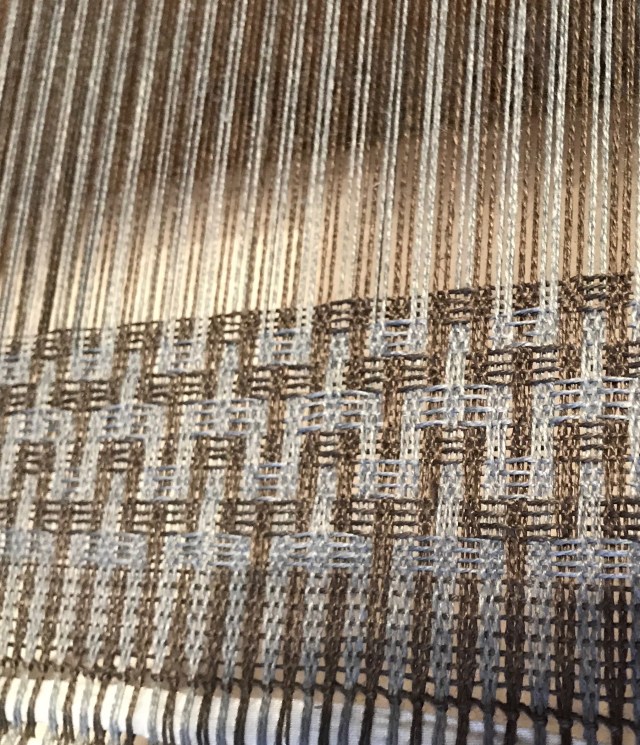
At first I thought I had left enough weft yarn from measuring the warp, but the extra spread from changing from a 10 dent to an 8 dent reed through my weft measurements all out of whack. So although I started by using only one color per pattern repeat, I decided to just go with the flow and change colors as I ran out of a full bobbin of any given color, alternating as I wove.
It was a bit hairy at times, but overall it worked out pretty well.
In my infinite wisdom, I decided to repeat the dent and then hemstitch at the originally planned length, 70 inches, not thinking that the wider width (does that sound brilliant, or what?) would require a longer length (so technical!). I left a nice fringe length, and then started another section without a dent at the hem. Instead of 36 inches, though, I only had a weaving length of 20 before I had to call it a day because I couldn’t get anymore shed. Since I was just flying blind anyway, I pulled it off the lo0m and threw it into the washing machine on the delicate cycle with Tide Colorfast. There was no telling how much bleeding might occur, and Tide Colorfast has saved me in the past, and it did very well here. It was hung to dry – and being in Arizona in August, out in the sunshine it went and it was all dry in no time at all.
The length versus width issue was very apparent here. And the wide dent had hemstitch on either side, so guess what? It’s staying all one piece.
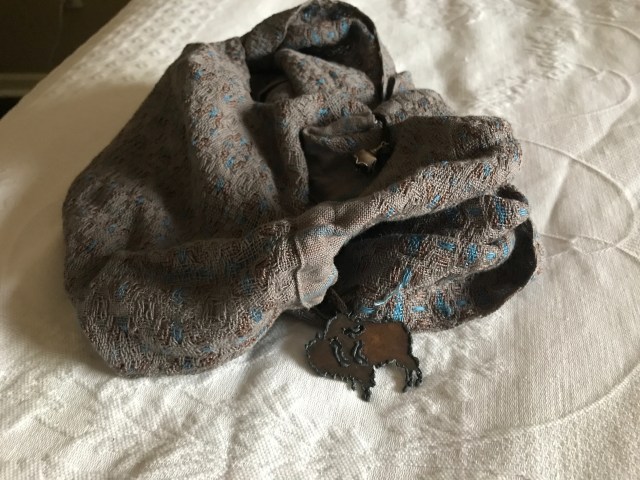
Of course I couldn’t have a boring fringe. So I decided to knot a macrame pattern, tying on beads and things on the fourth row of knots, then trimming off the ragged edges. I used charms, beads, feathers, orphaned earrings and buttons – quite a mishmash of memories and symbols.
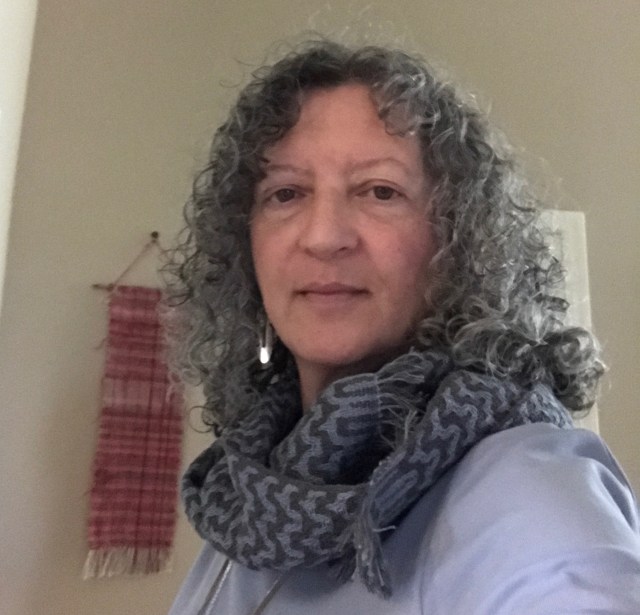
The beads tingle and ring when I throw the scarf around my shoulders. I hate to think of it lying rolled up in a dark drawer – there was so much work put in this (spinning, dying, weaving and finishing) that I couldn’t bear to think about parting with it. So, when I find the right type of curtain rod, it will be hanging on a wall in my home to I can enjoy it when I’m not wearing it. Deflected doubleweave is currently my favorite structure.


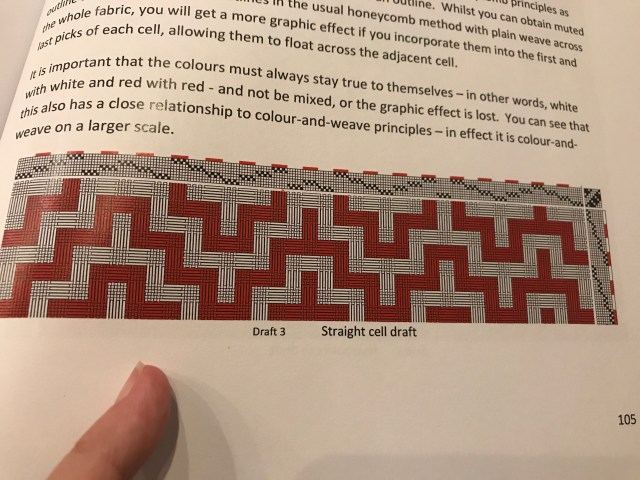






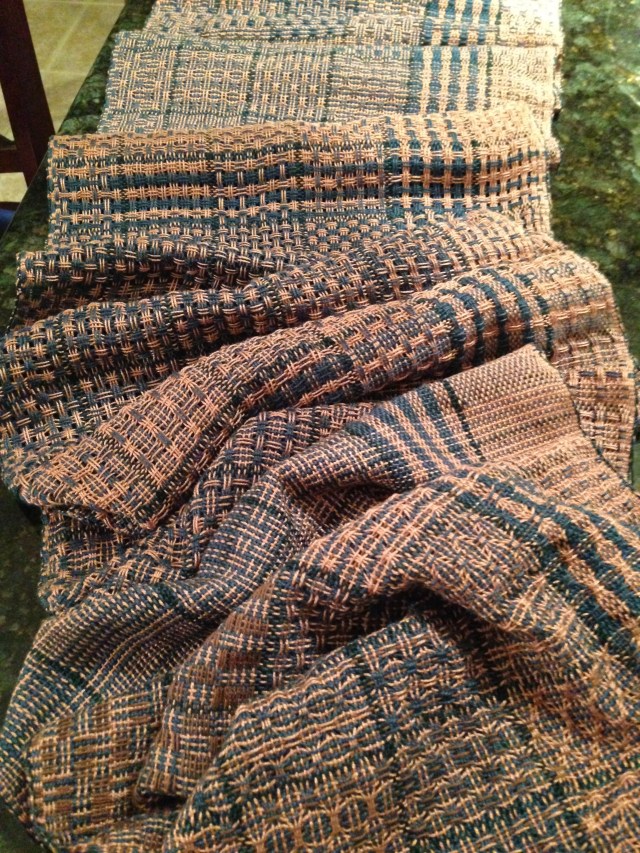

 There are so many weaving drafts out on the internet, whether through social media or dedicated websites it’s overwhelming at times. Some people like to “design” their own weaving drafts – and I have weaving buddies that do some incredible designing. My needs are pretty basic ( and on an 8 shaft loom). Most times I can take a basic pattern and just by the choice of fiber make it a different animal.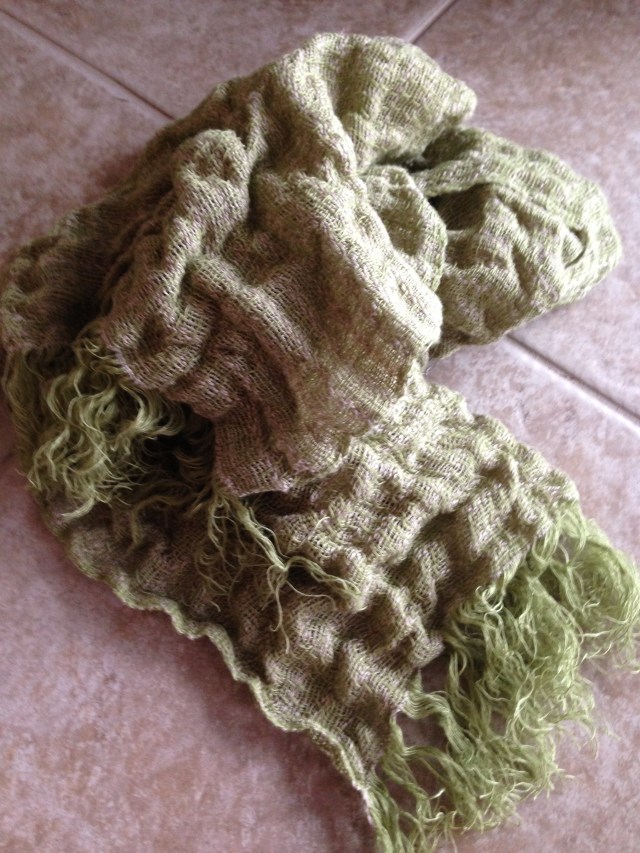




 Vairarenbeth's Blog