On August 21st through the 23rd, The National Museum of the American Coverlet was the scene of the 2026 Flax & Linen Symposium, hosted by Cassie Dickson and her fabulous team. Presentations were made by Cindy Conner, Cassie Dickson, Andrea Myklebust, Michelle Parrish and Karla Sandwith, with additional material and input from Sarah Bixler and Brenda Page.
Honestly, I don’t even know where to start. The energy was palpable throughout the building and during the entire time I attended. Approximately 80 fiber enthusiasts from all walks of life and all ages gathered together to learn about flax-to-linen from the ground up. Mostly everyone had multiple areas of interest from farming and processing to spinning and weaving and whatever creative force using linen as the medium.
There were three days of structured activities and lectures. I did not attend the first day, which concentrated on a hands-on approach to experiencing the flax to linen process. But, not to worry, that information and more was interspersed through the following two days of presentations and demonstrations. The level of organization was quite impressive – and this is coming from a veteran workshop/seminar attendee (that’s me).
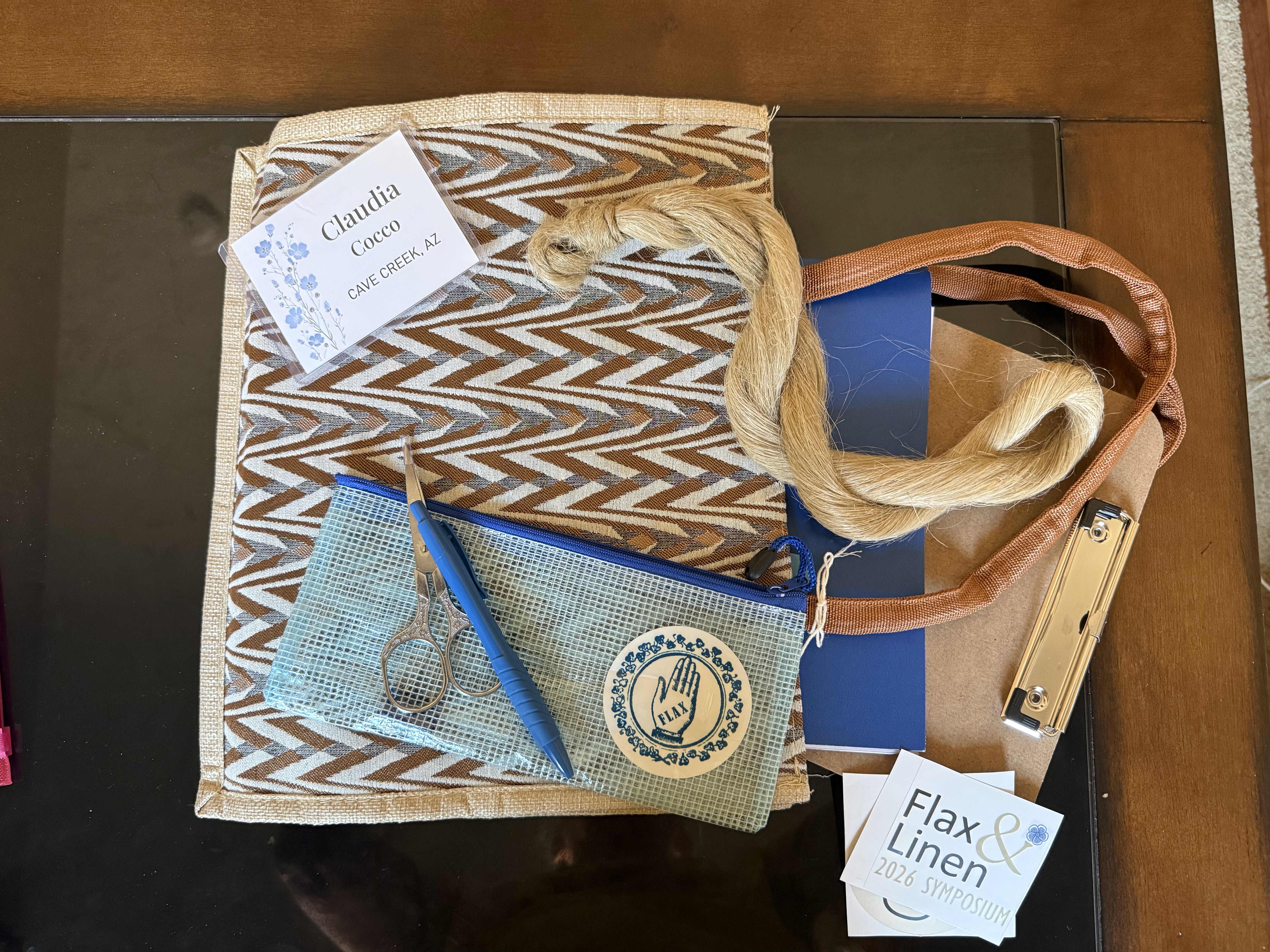
The conference bag included a magnetic name tag (which worked extremely well) plus a clipboard, a blue folder with sleeves and blank sheets to take notes. It also inlcuded the conference schedule, a small flax strick, name tag for the conference bag, and conference handouts with resource information. There was also a pencil holder with a pair of scissors, a pen and two stickers. They thought of everything you’d need.
Three groups rotated through the programs each day to keep the sessions a reasonable size. The Questions and Answers sessions were all lively – everyone had information to share and ask questions to dig deeper into the presentation material. Multiple approaches for weaving, processing and using the fiber were shared. It really was an informational exchange at all levels. I believe participants walked away with a perspective of the breadth and depth of working with flax and linen, understanding there’s no one right way to do it – that how you perform one part of the process is dependent on your specific environment within its benefits and limitations. There were also the “fun” elements of experimenting with making paper with flax, learning about making DIY tools, and a participant demonstration of weaving on a warp-weighted loom. There were some evening spin-ins and items for sale by the attendees as well as selections in the Museum Shop. I snagged a fine toothed hackle, some flax roving and beautiful bookmarks by Michelle Parrish.
Some takeaways that really touched home were Cassie’s perspective that “With each flax harvest, everything’s a dyelot.” Meaning each harvest can become its own experiment with how you process your flax. In that vein, Karla Sandwith had the insight that “You need to use the methods that work in our contemporary environment.” Materials used back in the day may not be environmentally responsible today, and there are new materials that are still revealing their unintended consequences on the environment.
There were successes and lessons learned that were shared as well – down to whether a weaver leaves their lease sticks in while weaving – or not – and even if dowels are maybe a better choice in some circumstances. Basically you do what works for you and the approach that makes you comfortable. After all, “What happens behind the lease sticks stays behind the lease sticks.” – Brenda Page
A top quote for me, however, was when Andrea Mycklebust said that “The future is local”. How that truly resonated with the energy at the conference. By attending this conference we demonstrated the intent to change the way we produce our clothes, functional items and art. Every day, every small choice, brings us closer to where we have a positive impact on craft, its artistic interpretation, and a better way to engage with our natural environment. I am excited to expand my weaving practice to producing yardage to handsew my clothes as they need replacing. Linen was once the indomitable fabric – flax as a plant has no part that goes to waste. In line with other bast plants like hemp and nettle, as well as wool products, we can bring the way we clothe ourselves back to responsible stewardship of the earth. Plus, it acts as a creative expression of our personalities in how we craft and dress.
Flax and linen work by the presenters:
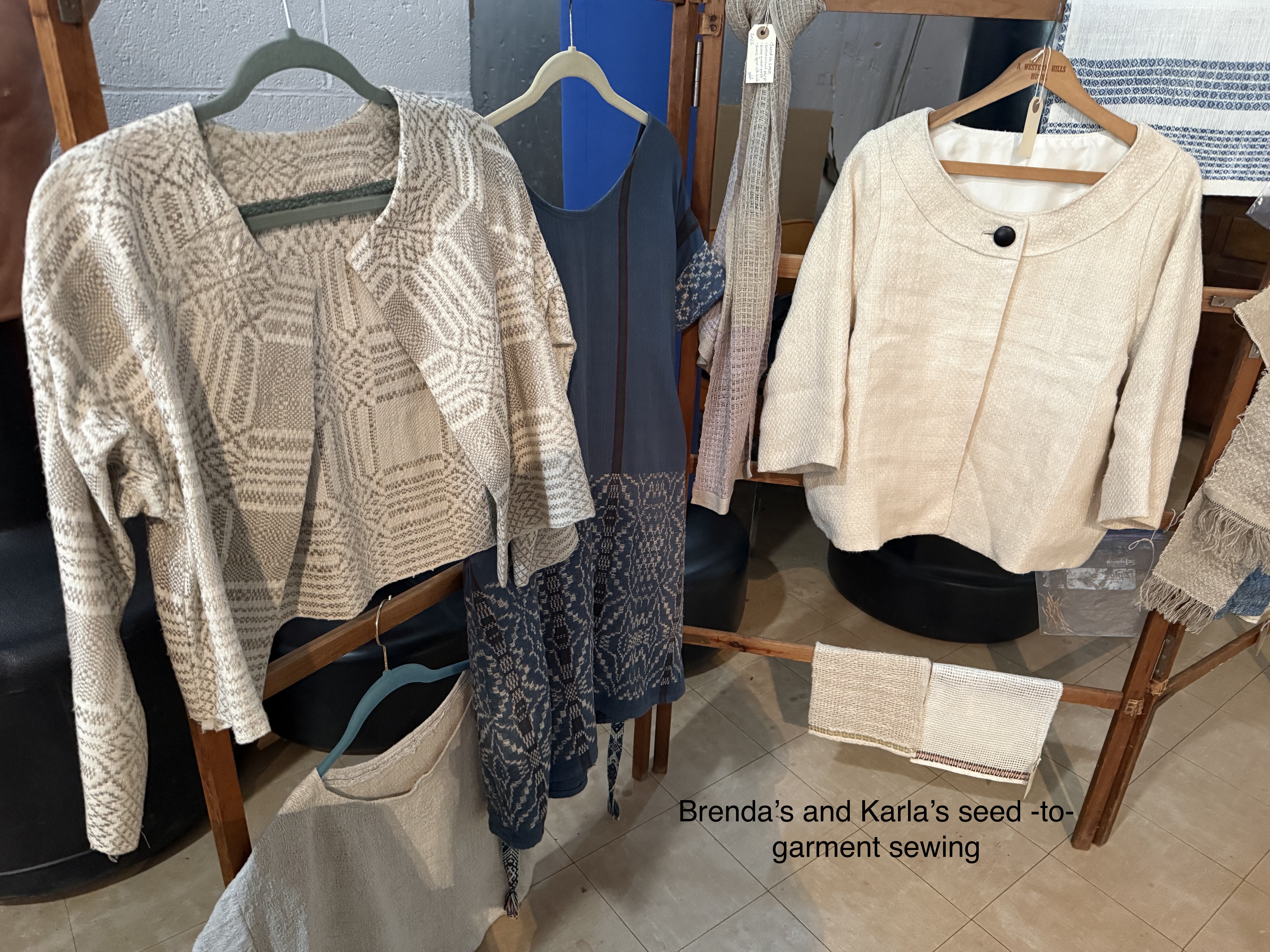
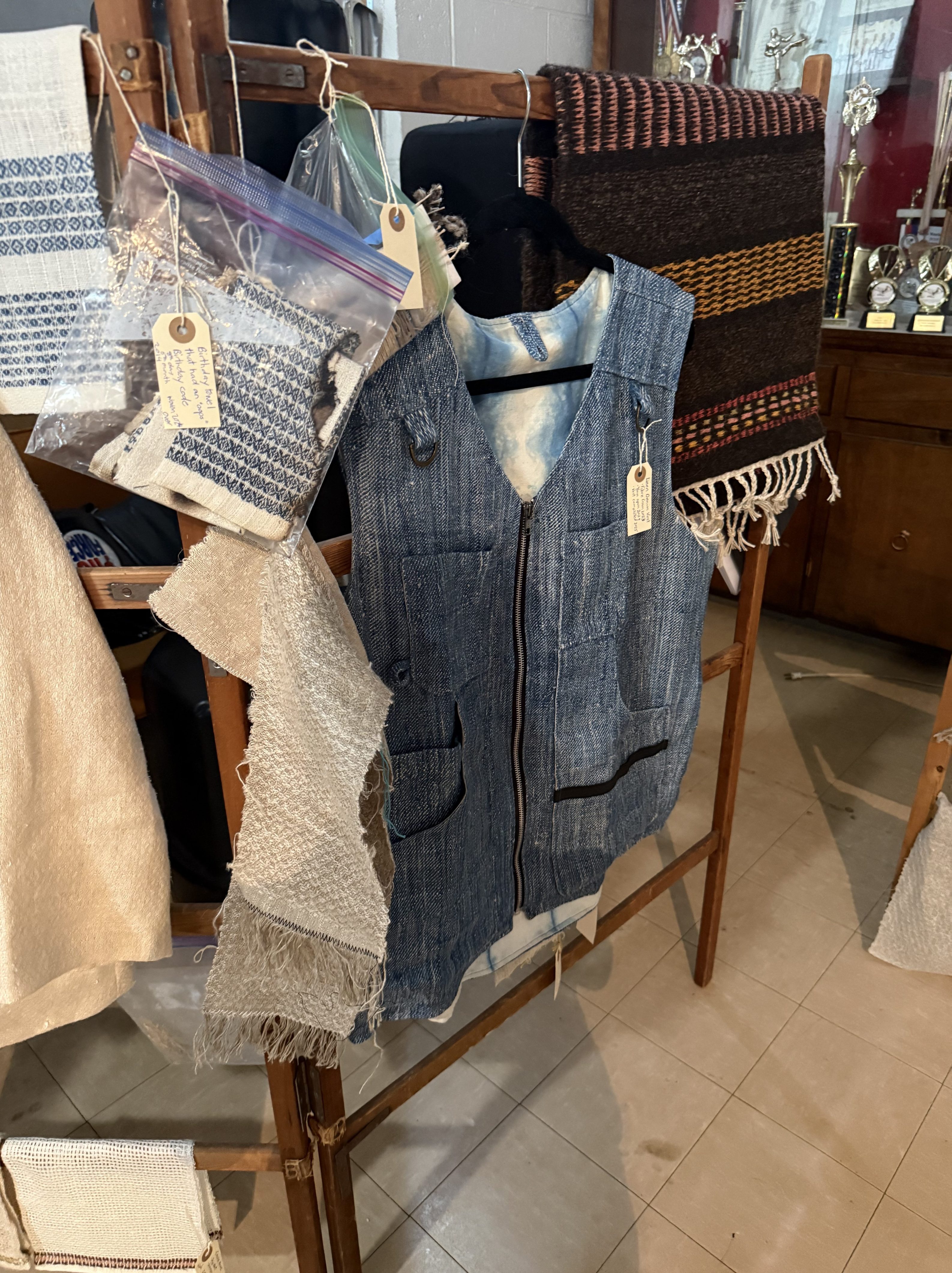
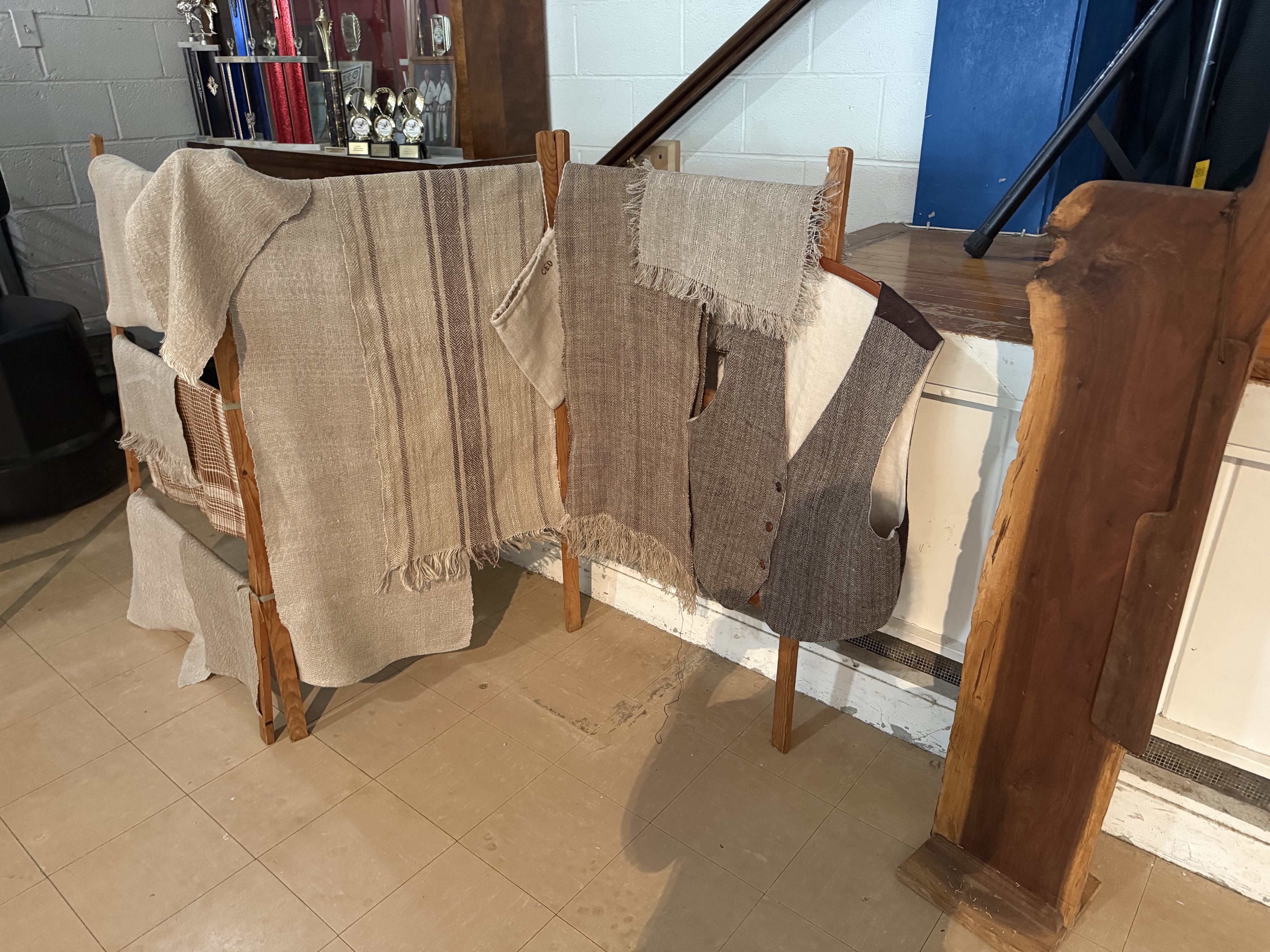
It would be great to see an active online flax-to-linen community grow out of this experience. Let’s keep this community going and maybe we won’t have to wait ten years for the next Symposium!
Note:
The Virtual Conference is available in September, and can be purchased through Lessonface. It will be available for viewing online through August 21, 2027.
All proceeds from the Symposium benefited The National Museum of the American Coverlet. NMAC also conducts a Coverlet College each year during the last week of September. This is a great venue to learn more about the history of the coverlet and the materials used, and get a good foundation towards making your own or expanding your coverlet making experience.


